Read the Afterword about the Paul B. Williams ALS Transportation Program
This is the unabridged version
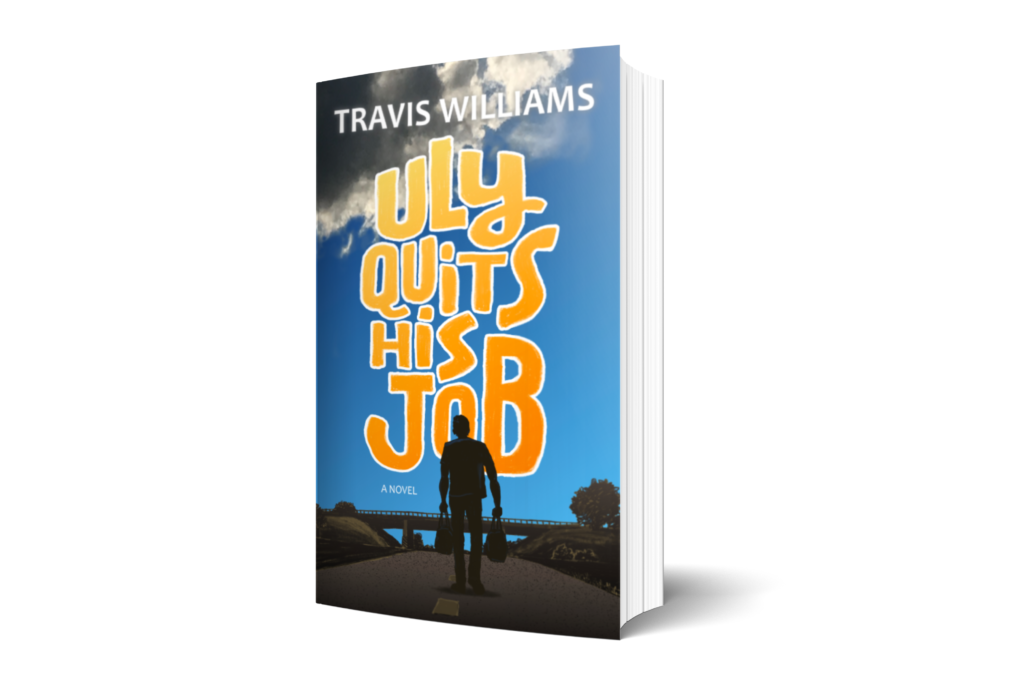
In my novel, Uly Quits His Job, I mention in the Afterword that readers can learn more about my dad on my website. The novel contains a shorter version of the Afterword.
This is the unabridged one.
About my dad
My father, Paul B. Williams, loved my sister, his grandchildren and me. He also loved my mom, Linda, and always wanted to be there for her. They met during high school and were married for forty-nine years.
He was an active outdoorsman, 10K, 5K, and marathon runner, bicyclist and bird watcher. He was a woodworker and built cabinets for our kitchen and built-ins for our living room.
He designed and carved long bows to give away as gifts to friends and family. He was also a primitive archer—he hunted with the bows and arrows he made. Daddy was an accomplished and frequent fisherman. He even bow hunted for fish.
He could cook. He loved to grill chicken and fish and would slow-cook a turkey and ham together overnight for Thanksgiving. He cooked big pots of wild game stew occasionally. My mom learned not to assume that it was chicken soup. He also loved to garden, and he grew grapes with which he made wine and jelly.
He could install plumbing, electrical wiring, doors, and windows. He could lay stone and cement blocks and work on cars. He painted still lifes and landscapes.
He was an adult Sunday school teacher and lead Christian mission trips to Mexico, Central America, and the Caribbean. His teams would collaborate with local project leaders to help build houses, churches, and toilets. He made multiple trips with teams to New Orleans after Hurricane Katrina.
My dad had a bachelors degree in zoology and a masters in parasitology and microbiology, all from Auburn University in Alabama. He knew the common and scientific names of all the plants and animals in his environment—all the trees, snakes, insects, spiders, and birds. I know, because when I was a boy I would quiz him.
My father was also an entrepreneur and businessman. In 1981 he co-founded Owen & Williams Fish Farm. He and his extraordinarily loyal employees grew the farm into a thriving provider of fish for stocking ponds and lakes throughout the southeastern United States and well beyond. As I write this in 2022, the fish farm is still an active, successful business.
It wasn’t a stroke
In the summer of 2013, my dad lost the ability to say the letter r. When he said a word with an r in it, his tongue simply didn’t create the sound. I suspected that he had suffered a mini-stroke that damaged a nerve controlling the tip of his tongue.
I was very wrong.
In February 2014, he was diagnosed with ALS. The disease progressed quickly, and he died in November of 2016.
Back in 2014, after he was diagnosed, my mom and dad traded in their two-year old hybrid Camry that they loved to purchase a wheelchair accessible van.
In an interview, my mom said about my dad, “Having the van and being able to go and do as much as we could during the last year-and-nine-months of his life was invaluable.”
Accessible transportation gave them the opportunity to get out of the house to do normal every day activities, attend church, go to doctors’ appointments, and travel on vacation to Gulf Shores, Alabama. Daddy had always fished off the pier at Orange Beach there in Gulf Shores, and he didn’t stop when he could only fish with my mom’s help while riding in a wheelchair.
Not long after Daddy passed away, Mama was thinking about what she could do to help individuals with ALS and their families. She knew of a man with ALS who was in need of an accessible van. She had also been wrestling with how best to honor my father’s memory. The ALS Association chapter in Georgia had been an extraordinary resource for our family. The people there are truly dedicated to helping others.
All of this was heavy on her heart, and she had been praying about it.
Accessible transportation is important to quality of life
One day she was driving home after having gone to buy groceries when it occurred to her that all ALS patients and their families have a considerable need for accessible transportation. Having access to a vehicle that can accommodate limited mobility is one of the most important ways that ALS patients maintain their quality of life for as long as possible. That was certainly what our family had experienced.
In the interview I mentioned, my mom also says, “I realized that there had to be a way to help people who could not afford a van.”
She had the idea to provide transportation to ALS patients and their families for absolutely any reason at no cost to them. She didn’t want to limit the service to medical needs. She says it best, “Not just to have a way to go to the clinic, or a way to go to the doctor, or a way to go to the hospital, but a way to enjoy life.”
She decided to call the ALS Association. She asked them if the idea was doable. They said that it was absolutely doable without a doubt.
Partnering with the ALS Association
In 2017, Linda Williams and the Georgia chapter of the ALS Association created the Paul B. Williams ALS Transportation Program. In the interview, she says the program “allows patients with ALS to live to the very fullest all their days—to just add to the quality of their life.”
Through the program, which is administered by the Georgia ALS Association, individuals and their families living with ALS in Georgia can rent an accessible van at no cost to themselves for any purpose for short trips and long ones, in state or out-of-state. They can also request a ride from local vendors who provide short trips for non-emergency transportation to people with disabilities. For ALS patients in Georgia, the Paul B. Williams ALS Transportation Program pays the vendor.
Because it’s a program that is administered through the Georgia chapter of the ALS Association, it benefits from being part of their non-profit foundation and fundraising efforts. All the costs incurred by the program for van rentals, travel assistance and even vehicle modifications and grants toward the purchase of a van are borne by donations given to the program.
While my mother, family and friends donate funds to the Transportation Program regularly, many others do so as well. Interested foundations have given grants to the Georgia ALS Association to maintain the program. A portion of the royalties I receive from the sale of my books will also be donated to the Paul B. Williams ALS Transportation Program.
Patients who have used the program have expressed tremendous gratitude for it. Many people have said that they were blessed by the opportunities they’ve had to use it. It is an extraordinary program, and it helps people. This is one of the primary reasons that my family and I are very interested in keeping the program active and well-funded.
As I completed the manuscript for Uly Quits His Job, a friend noted that the way in which the program provides help to people who are in need is mirrored in the book by the help that some characters give Uly. While that was not intentional, perhaps it was subconscious.
Since there does seem to be a connection, I decided to share some information about the Transportation Program with readers.
Travis Williams
April 2022